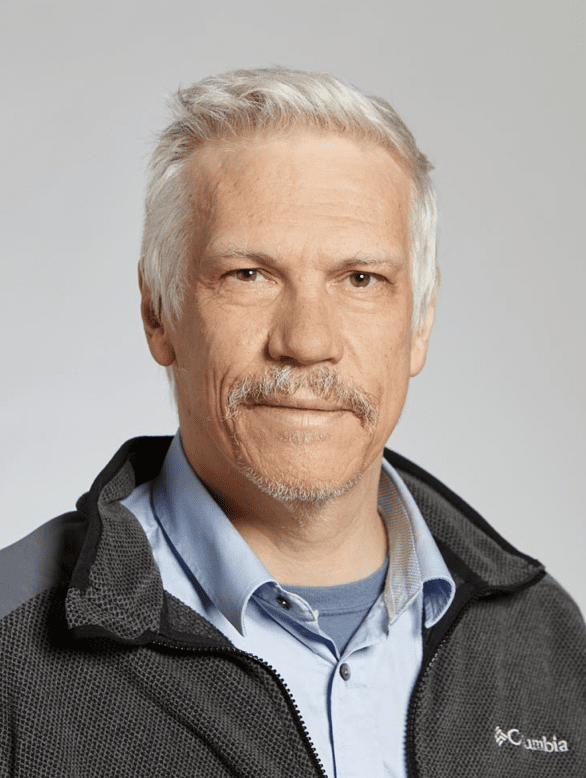
Luc Van Gool
INSAIT Sofia University
Date: December 17, 2026
TBD
Abstract
TBD
Bio
TBD
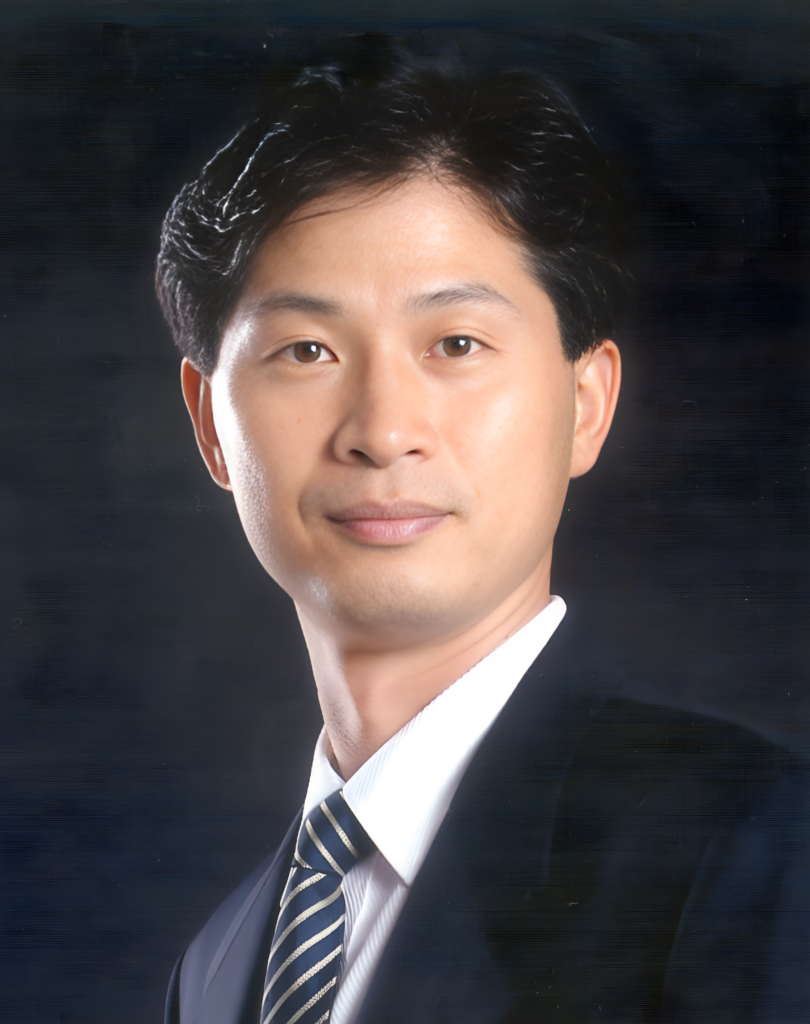
Kyoung Mu Lee
Seoul National University
Date: December 17, 2026
Awareness in Image Restoration: Understanding Content and Task
Abstract
What makes a restored image truly useful – a higher fidelity score, a more convincing appearance, or better performance on a downstream task? Conventional learning-based restoration typically optimizes a predefined objective for the training data, often giving limited attention to image content and intended use. This talk explores how content and task awareness can reshape restoration. Understanding structures, textures, and semantics helps determine how to restore an image, while understanding its purpose guides what to preserve or enhance. We examine how these perspectives inform model design, learning objectives, and inference, and revisit the trade-offs among fidelity, perceptual quality, and task performance. The central question is simple: can we restore images better by understanding what matters?
Bio
Kyoung Mu Lee (Fellow, IEEE) is currently the Editor-in-Chief (EiC) of the IEEE Transactions on Pattern Analysis and Machine Intelligence (TPAMI); He is a distinguished professor at Seoul National University (SNU). He was the director of the Interdisciplinary Graduate Program in SNU. He is an Advisory Board Member of the Computer Vision Foundation (CVF). He was a Distinguished Lecturer of the Asia-Pacific Signal and Information Processing Association (APSIPA) from 2012 to 2013. He has received several awards, in particular, the Medal of Merit and the Scientist of Engineers of the Month Award from the Korean Government in 2018 and 2020, respectively; the Most Influential Paper Over the Decade Award by the IAPR Machine Vision Application in 2009; the ACCV Honorable Mention Award in 2007; the Okawa Foundation Research Grant Award in 2006, and the SNU Excellence in Research Award in 2020. He has served as a General Chair for ICCV2019, ACMMM2018, and ACCV2018, and will serve for CVPR2028. He is the founding member and served as the President of the Korean Computer Vision Society (KCVS). Prof. Lee is a Fellow of IEEE, a member of the Korean Academy of Science and Technology (KAST) and the National Academy of Engineering of Korea (NAEK).
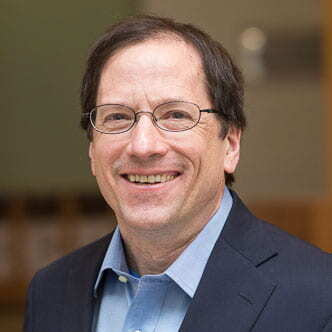
William T. Freeman
Massachusetts Institute of Technology
Date: December 17, 2026
Two recent projects from my lab: (a) Is there a science of vision?, and (b) The 40-year long project.
Abstract
I’ll present two recent projects from my lab:
(a) Is there a science of vision?
When I began studying vision, I thought the researchers would first learn the science of vision, and then build a vision machine. Now, we have large models that are very good vision machines, but I feel we still don’t know the science of vision. I’ll discuss whether there is a science of vision, and present my lab’s recent efforts to describe it.
(b) The 40 year-long project.
Years ago, I developed a design for a collapsible rigid structure, with potential applications for the consumer and in robotics. We recently completed that design, and presented the work in the top conference on Human-Computer Interaction, ACM CHI 2026. I’ll describe that 40 year long project.
Bio
William T. Freeman is the Thomas and Gerd Perkins Professor of Electrical Engineering and Computer Science (EECS) at MIT, and a member of the Computer Science and Artificial Intelligence Laboratory (CSAIL) there. He was the Associate Department Head of EECS from 2011–2014. Since 2015, he has also been a research manager in Google Research in Cambridge, MA.
His current research interests include mid-level vision and computational photography. Previous research topics include steerable filters and pyramids, orientation histograms, the generic viewpoint assumption, color constancy, computer vision for computer games, motion magnification, and belief propagation in networks with loops. He received outstanding paper awards at computer vision or machine learning conferences in 1997, 2006, 2009, 2012 and 2019, and test-of-time awards for papers from 1990, 1995, 2002, 2005, and 2012. He shared the 2020 Breakthrough Prize in Physics for a consulting role with the Event Horizon Telescope collaboration, which reconstructed the first image of a black hole. He is a member of the National Academy of Engineering, and a Fellow of the IEEE, ACM, and AAAI. In 2019, he received the PAMI Distinguished Researcher Award, the highest award in computer vision. He is co-author of the computer vision textbook, Computer Vision: Algorithms and Applications.
Explore the ACCV 2026 Program
View the schedule of keynote talks, oral sessions, and poster presentations.